Science Journalist
Science
News, features, interviews, stories and profiles.
Science journalist and physicist specialized in fundamental science.
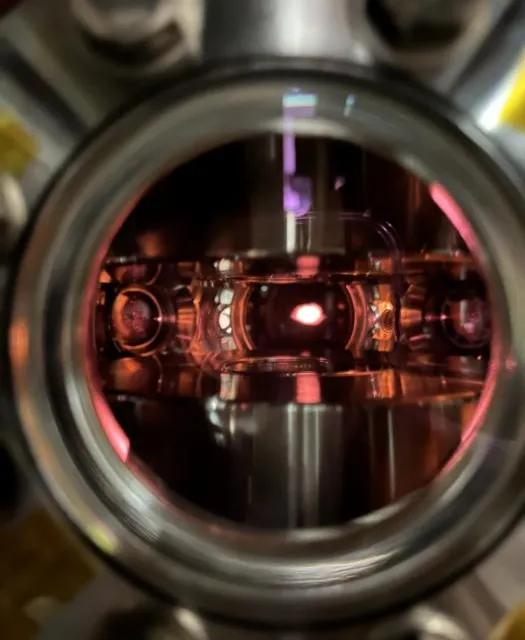
Direct imaging captures the crystalline vibrations of a supersolid
Published in Phys.org.
For the first time ICFO researchers, in collaboration with scientists from UAB, have directly imaged a spin-orbit-coupled supersolid. The team has observed quantum fluids of atoms forming stripes whose spacing oscillates in time, as the spacing of a crystal does. The study, published in Science, demonstrates unequivocally the dual superfluid and crystalline nature of such systems.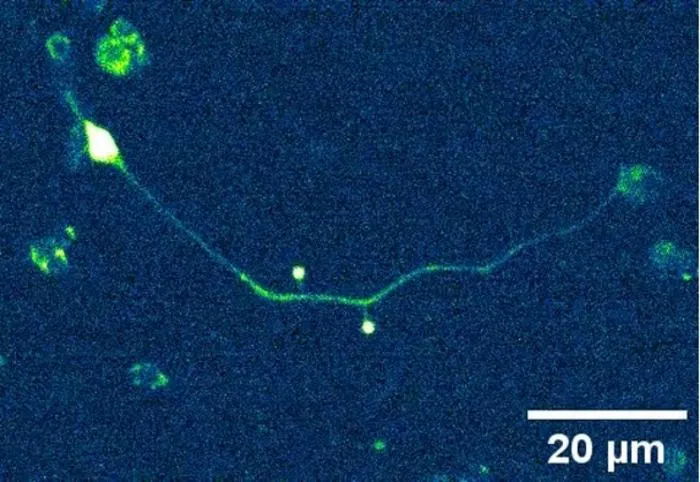
How do physical forces spread in neurons?
Published in Neuroscience News.
Researchers provide the most detailed description to date of this process at the molecular level, which is key to understanding how cells regulate their functions during embryo development and touch sensation. The findings are published in Nature Physics.
Sunlight generates entangled photon pairs for the first time
Published in Quantum News.
Researchers have used sunlight, despite its low coherence and intensity, to generate entangled photon pairs. The results, published in Optica, overturn the long-held belief that lasers, even with their high energy cost, are the most appropriate source of entangled photons.
Simuladores cuánticos: las maquetas del mundo microscópico
Publicado en ICFO.
¿Qué tienen en común Antoni Gaudí y físicos cuánticos como Daniel Barredo, Ignacio Cirac o Leticia Tarruell? Javier Argüello Luengo, co-autor junto con Alejandro González Tudela del libro “Simuladores cuánticos, construyendo las maquetas del mundo microscópico”, nos muestra las similitudes entre el trabajo del arquitecto y el de los físicos especializados en simulación cuántica.
Un modelo informático simula el impacto de las políticas públicas en la pobreza
Publicado en Ciencia para llevar - 20 minutos.
El CSIC ha elaborado un sistema que permitirá a gobiernos y ayuntamientos simular con antelación si sus medidas son discriminatorias o contribuyen al aumento de la pobreza.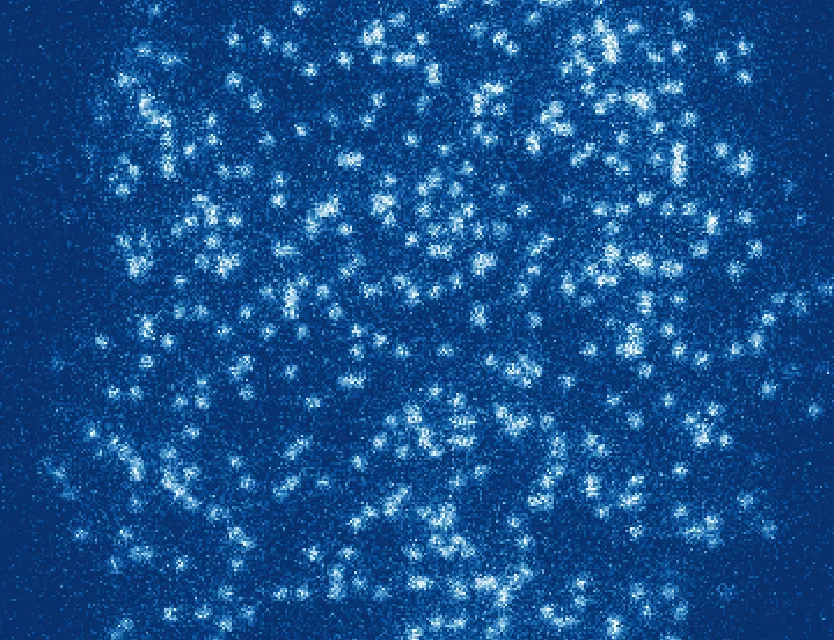
Nace QUIONE, el primer procesador cuántico atómico de España
Publicado en Agencia SINC.
Los investigadores del ICFO construyen QUIONE, un simulador cuántico capaz de observar átomos individuales en un gas cuántico de estroncio.